
WRITING IN THE YEAR OF OUR LORD COVID
May 13th, 2021
By Ellen Goodlett
I have always prided myself on being a fast writer. My speed allowed me to begin writing full-time before my debut novel was published, thanks to a series of ghostwriting and work-for-hire gigs. Freelancing is a fast-paced, insecure world. I never knew when or from where my next paycheck will be coming, so I tended to say yes to everything, even when my schedule was flooded. I told myself it was fine. I liked working that way.
In some ways, I truly did. It’s not just my writing that is fast-paced. I’m a high-energy person. I’m happiest when pursuing a goal—or better yet, 5-10 goals at once. I embraced the work-hard, play-hard mentality of my 20s, of New York City where I lived at the time, of the stage of my life where I was meant to be building things.
And, too, I enjoyed the new and disparate challenges freelancing offered. When you say yes to almost any project, you wind up writing about topics you never imagined would interest you. I learned I liked co-writing and ghosting, blending my style with other writers’, working as part of a team rather than solo.
Ghostwriting gets a bad rap, because readers sometimes feel those books don’t really “belong” to the authors whose names are on the cover. But in my experience, ghostwriting is highly collaborative. My best clients provide me reams of detail about the books they want—world-building, outlines, character descriptions. My job is to flesh out their vision before they polish the final edits.
I do not feel the same way about books I’ve ghosted as I do about my own stories. I can read reviews of books I’ve ghostwritten without any sense of either pride or cringe. I had a hand in those books’ creation, yes, but they belonged to other creators all along. I never minded. It felt like I had an extra layer of protection from the terror that comes with putting my own stories—my blood, sweat, and tears—out into the world.
But there are trade-offs, I have learned.
I’ve been writing full-time for years now at a frantic, sometimes breakneck, pace. And yet, the shelf where my own books sit looks fairly sparse.
Even before the pandemic, I had planned to change this in 2020. I had planned to slow down, to accept less work-for-hire, to focus on my own projects.
I got what I wished for, though as usual, not in the way I expected.
Last summer, I worked on my first-ever fiction podcast, created specifically for audio. With the Sara Shepard, no less! Season 1 of MEMORY LANE, a mother-daughter road trip thriller that we co-wrote, launched last month. This week it became a featured Apple Podcast. (The show is also available on Spotify and anywhere else you prefer to listen.)


In the fall, I started working on another fiction podcast, this time as the sole author. ELIXIR, a Prohibition-era inspired fantasy about two women falling into star-crossed love in a world of magical speakeasies and deadly mafiosos, launches on podcast platforms everywhere on June 3rd.
A short story I wrote for the Hooked app, MORGAN’S SECRET ADMIRER, was turned into a short film.

Some other projects I can’t yet discuss began to grow legs.
Still, it is difficult to shake the nagging sensation that I’m not doing enough. Not writing enough, not being visible enough, not posting enough. I don’t have projects in the pipelines where I’d always dreamed of building readers. I have no idea when or even if I’ll publish another YA book. I hope to, but there are days that well of inspiration feels so dry I have no idea how to fill it again.
In 2020, I backed off most social media platforms entirely, even as well-meaning (non-writer) friends texted: “at least you have plenty of time to write now!” Sure. But time alone =/= creative fuel.

I did get what I asked for, though. I slowed down. Wrote less words-per-month than ever in my adult life. Stopped chasing every single potential project, mostly due to sheer exhaustion.
It’s difficult for someone accustomed to sprinting to start to walk instead. At first, the voice in the back of my head was constant. Pick up the pace, stop slacking, work harder.
Over time, however, that voice grew softer.
It helped that Portugal, where I now live, has a much lower cost-of-living and a better sense of work-life balance than the US. The pay cuts still trigger a knee-jerk panic response, but I can talk myself off that ledge now, logically.
That little unsatisfied voice will probably always be there, in some form or another. But I am learning how and when to tune it out.
At the same time, in my day-to-day life, I feel calmer. I don’t want to say “happier,” because that’s such a fleeting state, but I am content. I exist in the present. I give myself more days off.
Some of those days I wind up riddled with guilt anyway, but more and more often, with practice, I’m able to step away from my desk without shame or anxiety. Because I know that tomorrow—or the next day, or whenever I’m ready—I will pick up the pen again. And when I do, my writing will be all the better for the time I took to breathe.
THE DIRTY SECRET ABOUT TRAVEL
march 22nd, 2020
By Ellen Goodlett
It doesn’t come up often in the perfect Instagram shots, the #livelaughlove tags, the cutesy captions. Even when I’m talking to friends back home in person, recounting my trips, I hardly ever bring it up. It sounds too much like a humblebrag, a lucky person problem. It is. I get that.
But anyone who’s traveled often or for long stretches of time probably knows what I’m talking about.
Every new place you visit expands you. (We love to talk about that.) You stretch to contain these new experiences: music like you’ve never heard it, foods you’ve never dreamt of combining, fruits and spices you’ve never seen before. You fall in love with mysterious overgrown ruins, with a khao soi just the way one hole-in-the-wall makes it, with twisting medieval alleys, with white sand beaches that look like something from a catalogue.
Not to mention the people. Locals who welcome you with open arms, become new best friends. Travel companions you meet along the road, join forces with, look after for as long as your paths cross. Maybe even online friends you’ve talked to for years yet never met, who you’re finally in the same hemisphere as, and can embrace in person.
(The part we don’t talk about so much?)
Eventually, be it in a few days, weeks, maybe even months… you leave. And when you do, you leave pieces of yourself behind.
Shed skin cells, strands of hair. Slices of your heart and fragments of your soul.
Every time you leave somewhere, you die a little death. The life you lived in that place, in that moment, is gone forever.
But it’s fine, because you’re on the road, and for every yawning empty hollow that opens up in your chest, there’s a bright new beginning on the horizon. A new city or beach town or mountain villa waiting to steal your breath away. Waiting to show you, tantalizingly, what life might be like there, if you decided to stay.
You won’t. But you imagine it, for a time.
Over and over and over.
You grow used to living with your heart stretched wide open. You grow used to the fact that on any given day, at any given hour, if you let yourself think too hard about it, the grief and nostalgia, the missing of everything and everyone who isn’t with you right here and now, could consume you.
You crave food you’ll probably never taste again. You yearn for quiet little bars that have gone out of business, beaches now filled with trash, inside jokes that only a few people on the other side of the planet understand.
You get accustomed to missing ten people, none of whom have ever met or even heard of one another, at the same time—missing them so hard that “missing” barely encompasses the depth of it. It feels like being pulled in ten directions at once, until there’s nothing left over for you.
Whenever that mood strikes, your usual remedy is to step out into the sunshine. To find new connections, new loves. To revel in the here and now.
But you don’t expect this.
Suddenly every single one of your thousand loves, dotted all across the globe, is in danger at once. Some more than others, yet all trapped in the same uncertainty, the same fear of the unknown; and you’re trapped too, in one place and one life.
Maybe it’s a new life you intended to choose anyway. Maybe it’s the life you were trying on for size when the curtain came down, when the borders shut and the airlines cancelled your flight. Maybe it’s a life you’ve been in for a long time, a place you’ve always called home. Maybe it’s comforting to be there, or maybe it feels suffocating now, like a shoe you’ve outgrown.
Maybe it’s all of those things at once.
Regardless, there can be no running anymore, no forward or back. We have been suspended in amber, our missed pasts and longed-for futures on indefinite hold. All we have is the here. The now. The life right in front of us.
All we can do is live it.
So I moved to Lisbon
February 27th, 2020
By Ellen Goodlett
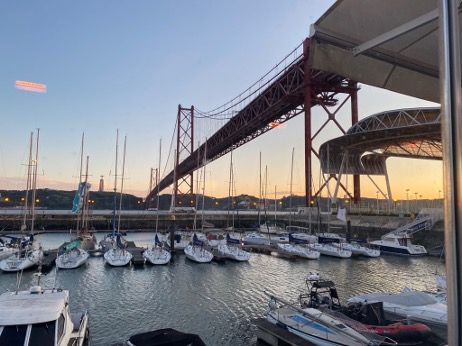
Everyone I’ve talked to lately, whether before, during or after my transcontinental move, keeps asking me why. “Why do you want to live in Lisbon?” I have a few different answers, but mostly I just wind up asking a different question altogether.
Specifically: “why would I want to stay in the United States?”
Wanderlust aside, I have some big issues with my country of origin.
Healthcare
I’m freelance, so I pay out of pocket for this back home. In my native state of Pennsylvania (where I moved after I returned to the US from traveling because I took one look at out-of-pocket premiums in my former residence of NYC and promptly fainted), this comes at the tune of around $300/month, which doesn’t even factor in my deductible (for the non-USians out there, this means the money you have to pay out of pocket before your coverage starts to, well, cover things. Yeah.)
And I’m LUCKY, because I’m relatively young, able-bodied (AKA able to find a cheaper premium than many people), and I have family to live with in a city with a pretty good medical system all things considered (heyo, Pittsburgh).
“Aren’t you worried about healthcare abroad?!” ask many USians I’ve talked to. To be fair, they often have no personal experience with healthcare systems outside the US, and they have been fed a heap of BS about how we might pay a premium in the good ole US of A, but it’s for great doctors, better care, etc. etc. (We really want to believe we get what we pay for, I guess?)
To them, I point out: the US healthcare system ranks 37th place globally. Portugal’s is #12. In another case study focused on analyzing the healthcare provided by 11 high-income nations, the US simply ranked “last.”
For cost comparisons, the average American spent $10,586 for healthcare in the year 2017. The average Portuguese citizen spent $2,681.
This was honestly the hardest thing for me about coming back to the US. Even just while traveling (my travel health insurance, which covers about what catastrophic does back in the US—emergencies, death, dismemberment—costs $67 a year), I did not have to worry about healthcare costs.
I didn’t do extensive math to make sure I could afford it before going to the doctor. I didn’t wonder if bystanders should call an ambulance when we saw a guy hit by a motorcycle because he might not have coverage (ok so I did but then non-USian friends pointed out that wasn’t an issue there). Just… it’s not a thing. And it really improved my quality of life, not harboring that invisible fear.
Cost of Living
Average consumer prices in Lisbon are around 50% lower than in NYC. Lisbon costs are up to 69% lower when it comes to rent (nice).
Okay, fair enough, you may say, but that’s just because NYC is one of the priciest places anywhere. Good point.
So let’s take Pittsburgh. You know, my hometown where everyone’s been moving because of all those HuffPo articles about how cute and affordable it is (agreed!).
Average consumer prices in Lisbon are still 32% lower than in Pittsburgh. Rent in Lisbon is 26% cheaper on average.
Also, did I mention that I’m freelance, and that writing books does not pay nearly as well as movies about writing books make it seem?
(To my non-publishing peeps: I love you, but please stop saying “JK Rowling!” when I say writers don’t make a lot of money. That’s like me telling you “Some people win the lottery!” if you tell me you need a raise at work.)
Safety
This comes up a lot. I don’t know if I should blame hyped-up media shows, clickbait articles, lack of personal experience, or just the fact that unfamiliar elements are generally scarier to humans than known quantities. But whatever drives it, so many people I talked to before I left the US expressed concern for my safety.
After all, America is the First World! Everywhere else is… Scary question marks?? I guess?
I’ve got some bad news for you, America: you are dangerous, too.
In 2016, the US ranked second-highest in the world for number of gun deaths per country. Per capita, we had the 28th-highest rate of deaths by gun violence in 2017, with 4.43 deaths per 100,000 people (that was higher than anywhere in North Africa or the Middle East that year, btw, though a much lower rate some of Central and South America).
I had trouble even finding recent stats for Portugal, but the 2014 data showed 0.2 homicides by firearm per 100,000 people (this isn’t factoring in suicides, but still).
Hell, in the US there are more guns than there are people. Around 120.5 guns for every 100 citizens.
Sure, there are places in the world more dangerous than the US. American citizens are lucky in many ways to be born where we are. But every time I leave home to travel, I inevitably receive a flood of concerned messages about my safety. I get it, worry is normal. But do me a favor and research these places. Actual statistics, not memes some guy named Bob shared to a pro-Confederacy FB group.
Because a lot of times, if you actually look at the data? It’s the other countries who should be scared of US.
Ease of Travel
Not only are inter-European flights wayyy cheaper even than the bargain basement budget flights we have in the States (you can catch international flights for $20 sometimes. What. That’s what I paid to take a NJ Transit train like 1 hour into New York City), but there’s also (GASP) a functional train system. One that’s actually comfortable to ride. Okay, sure, it’s no Japanese bullet-train, but the sleeper cars are a million times comfier than trying to nap on the repurposed bus seats Spirit fills their planes with.
Not to mention, almost all European cities have public transportation. (ILY Pittsburgh, but one train line and a few severely reduced bus routes is NOT SUFFICIENT.) I can be in another country in the time it would take me to drive from one side of PA to the other. Not even gonna get started on how many borders I could cross if I drove a whole Texas-length east.
SO, all of that factored together, and considering the fact that I can do my job from anywhere… I don’t see a good reason to stay in the United States. (Okay, friends and family, but my new plan is to just badger them all into visiting me instead. GET READY EVERYONE I hope you like egg custard tarts and salted cod. We’re gonna eat so much cod.)
As for why Lisbon specifically? That’s got to be a four-way tie between the sunny weather, the great food, the friendly people, and the chance to completely butcher a whole new language!
(Seriously though, this accent is killing me. I don’t think my mouth works that way. … Shut up.)
Articles
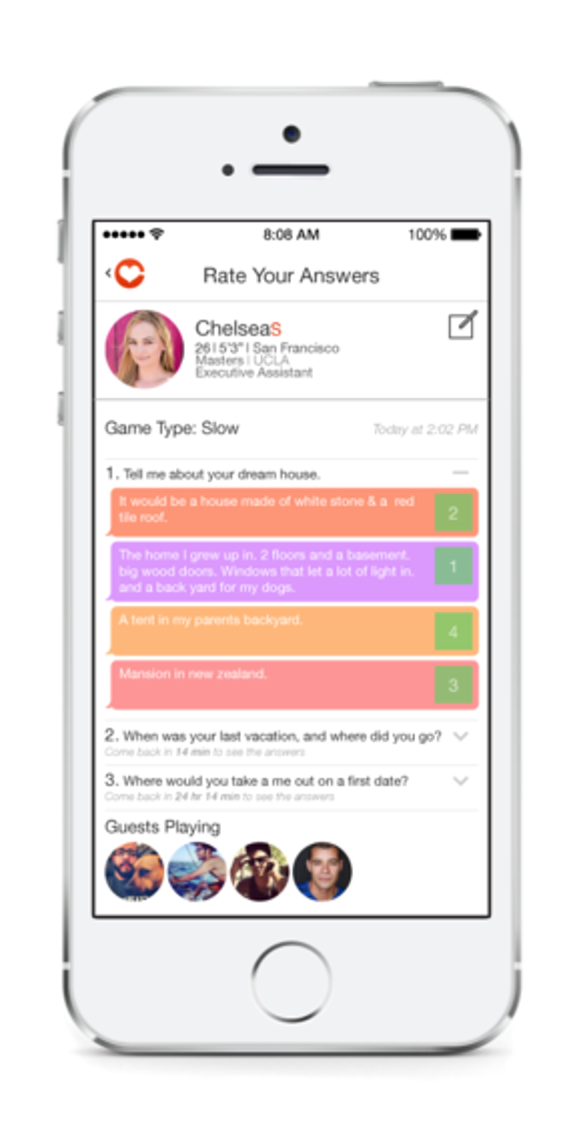
A Dating App for Quality, Not Quantity
It’s a fast-paced, tech-obsessed world out there. More and more people turn to their phones not just to help them remotely start their car, lock their garage, shock them into jogging faster, and ordering pizza at the touch of a button, but also to find that elusive life-goal we all long for ….
White Women: Stop Hating Yourselves
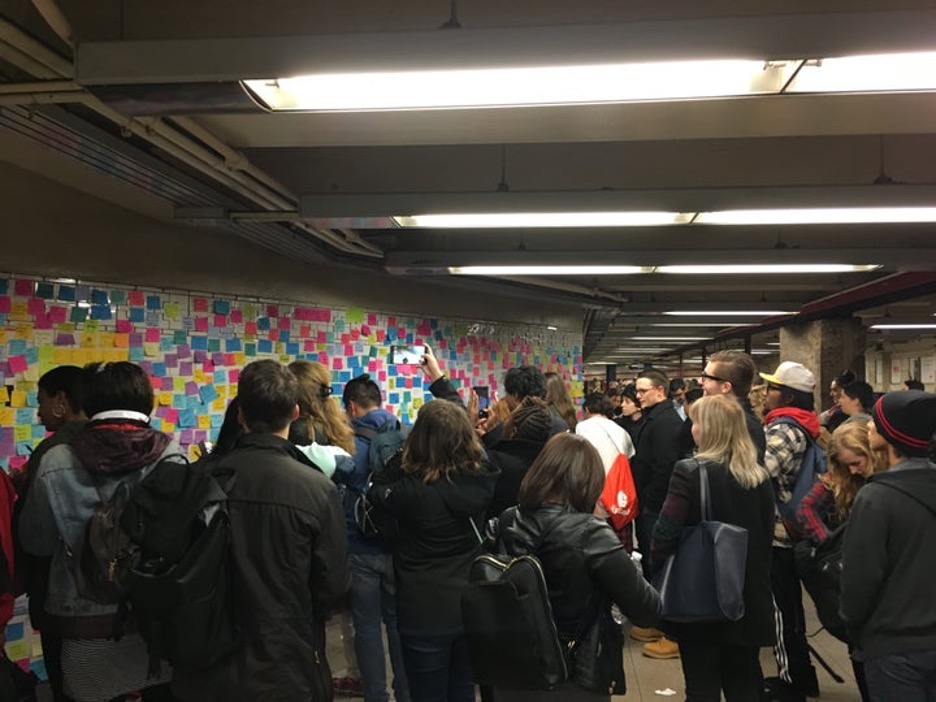
White women voted for Trump. We voted for a man who jokes about assaulting us. Who sees it as his God-given right to take whatever he wants from us, whenever he wants it, because he is a celebrity, he is powerful, he is a man. He deserves it. It’s owed to him — and by “it,” I mean us, because to him we are not people. We are objects. Trophies he buys in order to reward himself for a job well done…

Learning to Be Loud
I attended a women’s college by accident. I wanted to go to a small liberal arts school far enough away from my native Pittsburgh to spread my wings, but close enough that I could afford to drive home on holidays. The school to which I applied first decision rejected me…

Privilege Glasses
When I was 8, I discovered I needed glasses. Up until then, I’d been unaware that I was missing out on anything. For as long as I could remember, trees had been distant green fuzzy shapes…
Rejection Is Good For You
Homeward Bound: The New Post-Graduation Destination

Virtual BFFs
I have never met some of my best friends.
In recent years, less and less people I say this to find it weird. But 10 years ago when I was a shy high schooler discovering the wonders of online gaming, it was a lot stranger to say that I counted people living on another continent among my closest friends. My real life friends and family didn’t understand…

A Network of Friends
“It’s not what you know; it’s who.”
“Always carry a business card.”
“Make a good first impression.”
“Network, network, network.”